Before you choose a system
This guide looks at kerb appeal, condition, maintenance and the cost-versus-value calculation. It also explains what project photographs can show, why claimed percentage uplifts need evidence and when preserving the existing exterior may be the better choice.
Does Rendering Add Value to Your Home in the UK?
A suitable finish may make a property look better maintained and address a genuine external repair need. It can also be an unnecessary expense or harm character if poorly chosen. A rendering quotation prices building work; it is not a market valuation. Ask an appropriately experienced local agent or valuer about likely buyer response before spending solely for resale.
How Rendering Works
Rendering applies a protective and decorative finish over an assessed, prepared wall. The process may involve removing failed material, repairing the background, adding a suitable basecoat and reinforcement, and applying the finish. The build-up must suit the wall; reinforcement helps control some cracking but cannot prevent all movement-related defects.
Sand and cement, lime-based systems, monocouche, acrylic and silicone finishes have different applications. No one option produces a guaranteed resale premium. The programme depends on preparation, area, access and weather rather than a standard five- or ten-day completion promise.
Kerb Appeal and First Impressions
The exterior shapes a buyer’s first impression, especially where the existing finish is visibly damaged or inconsistent. That does not establish that rendered homes sell a particular percentage faster. Buyers may also prefer well-maintained original brick or stone, particularly on character properties.
Consider the whole street and the building’s details. Samples can help you judge colour and texture in daylight and shade. A neutral shade may suit your home, but no colour guarantees a valuation increase. Check planning and heritage restrictions before changing an established finish.
Protection and Maintenance
A correctly specified system can improve resistance to rain through the wall face. It does not automatically cure condensation, ground-related damp or leaks elsewhere. Diagnose defects before the finish is renewed, and keep records of the repairs so a buyer or surveyor can understand the work.
Maintenance varies with the finish, exposure and detailing. Through-coloured render can avoid an initial paint coat but still needs inspection, suitable cleaning and occasional repairs. Do not promise buyers a maintenance-free period or assume a generic product lifespan is a transferable guarantee.
Types of Rendering Finishes
Texture changes how an elevation reads at close range and from the street. These are aesthetic options, not a ranking of financial return:
Scroll the table horizontally on smaller screens.
| Finish | Visual character | Questions to ask |
|---|---|---|
| Smooth | Even, contemporary surface | Will it suit the building and make undulations more noticeable? |
| Textured or roughcast | More pronounced texture | Does it match the house and nearby finishes? |
| Scraped | Mineral, textured appearance | What sample and colour variation should be expected? |
| Pebbledash | Visible aggregate | Should existing character be retained, repaired or replaced? |
Choose the finish for compatibility and appearance, not an assumed percentage uplift. Covering attractive original masonry can remove a feature buyers value, while leaving failed render untreated may also affect confidence. Discuss the specific exterior and local market rather than applying a national resale rule.
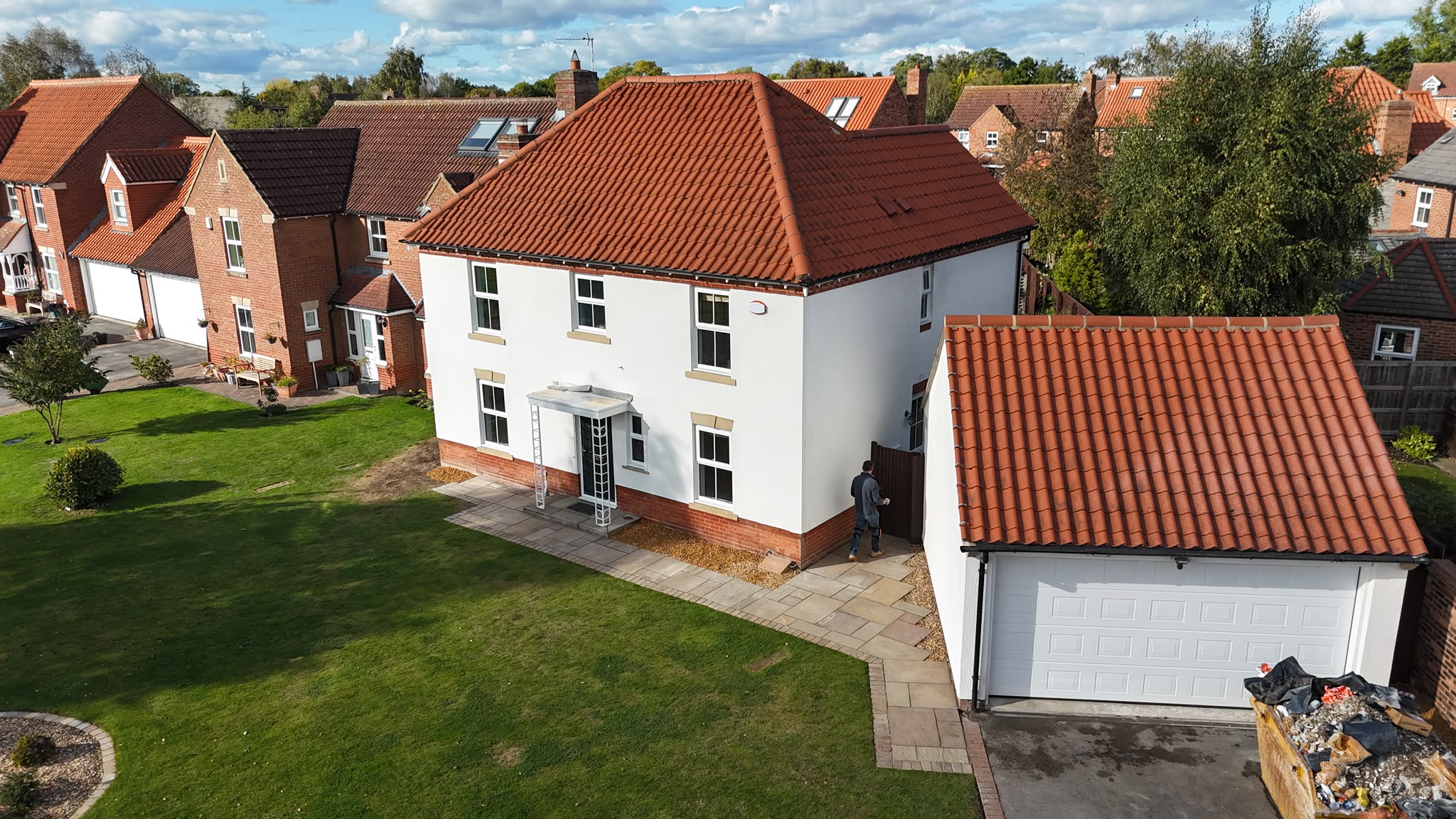
Project examples and the return-on-investment calculation
A useful financial comparison separates the cost of necessary repairs from an optional appearance upgrade, then considers any evidenced change in value. A finished-house photograph demonstrates appearance; it cannot establish the sale price, the repair scope or how much of a market change was caused by rendering.
What can genuine project examples tell you?
A project record can help you compare visible finishes, architectural details and the stages of work that are actually documented. It cannot demonstrate a property-value uplift without reliable valuations, dates, invoices and a way of separating rendering from other improvements or market changes.
For a damaged exterior, compare repairing the existing finish with replacement, and include the work needed to address the cause. A buyer may value clear repair documentation, but the cost of correcting a defect is not automatically added pound-for-pound to the selling price.
For a sound house, consider whether the proposed appearance fits the street and whether selling soon leaves enough time to recover the expenditure. The decision may still be worthwhile for your own enjoyment, even where no financial gain can be demonstrated.
Typical Costs Versus Value Added
A simple calculation can make the assumptions visible. Suppose work costs £10,000 and, hypothetically, a reliable valuation shows £15,000 attributable to that work: the difference is £5,000 before finance, selling costs and other expenses. Those invented figures illustrate arithmetic only; they are not a quote, forecast or reported project result.
Include every cost in your comparison:
- Survey and any specialist diagnosis or permissions.
- Preparation, repairs, access, render system, waste and VAT.
- Future cleaning, repairs and access required for maintenance.
- Finance and the risk that a sale valuation does not increase.
Insulation is a separate investment with its own design and cost. Assess possible energy savings against the actual wall, use and energy prices. Do not combine a guessed resale premium with a guaranteed bill-saving percentage to make a favourable payback calculation.
Regional Differences in the UK
Local buyer preferences and property values vary, but a higher house price does not create a predictable rendering uplift. Historic centres, suburban streets, villages and coastal areas can place different value on appearance and original fabric. Seek local advice specific to your address.
Exposure also affects the specification and maintenance budget. A property needing careful rainwater repairs or traditional materials is not directly comparable with a simple modern elevation. Cost and suitability should be assessed before drawing a regional return comparison.
Using valuation and survey evidence
Use evidence that relates to comparable properties and the actual work proposed. General estate-agent opinions, photographs or marketing statements cannot substantiate a fixed national percentage. Ask what a valuation is based on and whether the current exterior is reducing buyer confidence.
A building survey can identify defects or incompatible materials, while an energy assessment addresses thermal performance. Neither is an automatic endorsement of rendering or a guaranteed EPC-band improvement. Keep the scope, product specification and completion records clear for future buyers.
Further reading and guidance
Practical answers
Common questions
How much value can external rendering add to a UK property?
There is no verified universal percentage uplift in this guide. Appearance, condition, local demand and workmanship can influence buyer response, but a finish that suits one house can be inappropriate for another. Get property-specific valuation advice if resale is the main reason for the work.
What return on investment can you realistically expect?
Compare the complete cost with any evidenced gain; allow for maintenance, finance and the possibility of no increase. The worked example above is hypothetical. It does not show that Recently Rendered can predict a sale price or that insulation and render will pay for themselves.
In which situations can rendering reduce a home's value?
An unsympathetic finish can harm character, while poorly prepared or incompatible render can create defects and raise survey concerns. Covering a damp or moving wall conceals symptoms rather than fixing the cause. Check heritage restrictions and the building’s condition before changing the exterior.
Which render type offers the best ROI?
No render type has a guaranteed best ROI. Compatibility, preparation, detailing, appearance and future maintenance matter more than a binder label. Compare installed costs and written terms, and select a system suited to the wall rather than choosing from an unsupported financial league table.
How do local area, property type, and existing condition affect the value added?
Start with comparable local properties, the condition of your exterior and how well the design suits the street. Older masonry, failed coatings and exposed elevations can need very different work. These factors affect cost and suitability without establishing a fixed Yorkshire or property-type premium.
How does rendering compare with other home improvements for adding value?
Compare each option against the problem it solves in your home: essential repairs, usable space, thermal comfort or appearance. Rendering, kitchens and loft conversions have different costs and benefits. There is no reliable universal ranking of returns; local valuation advice and a complete budget are more useful than broad percentages.