Cracked render
The pattern and location of cracking can help identify what needs investigation. A stable surface defect is different from continuing movement or a failed background; the cause shapes the repair.
Moisture and wall defectsAssess the cause before the repair
Cracks, loose patches and weathered walls need more than a fresh coat of paint. We assess the damaged render and the surrounding surface, then explain whether a local repair or wider refurbishment is appropriate.
Get a Rendering Quote Or call 01904 530924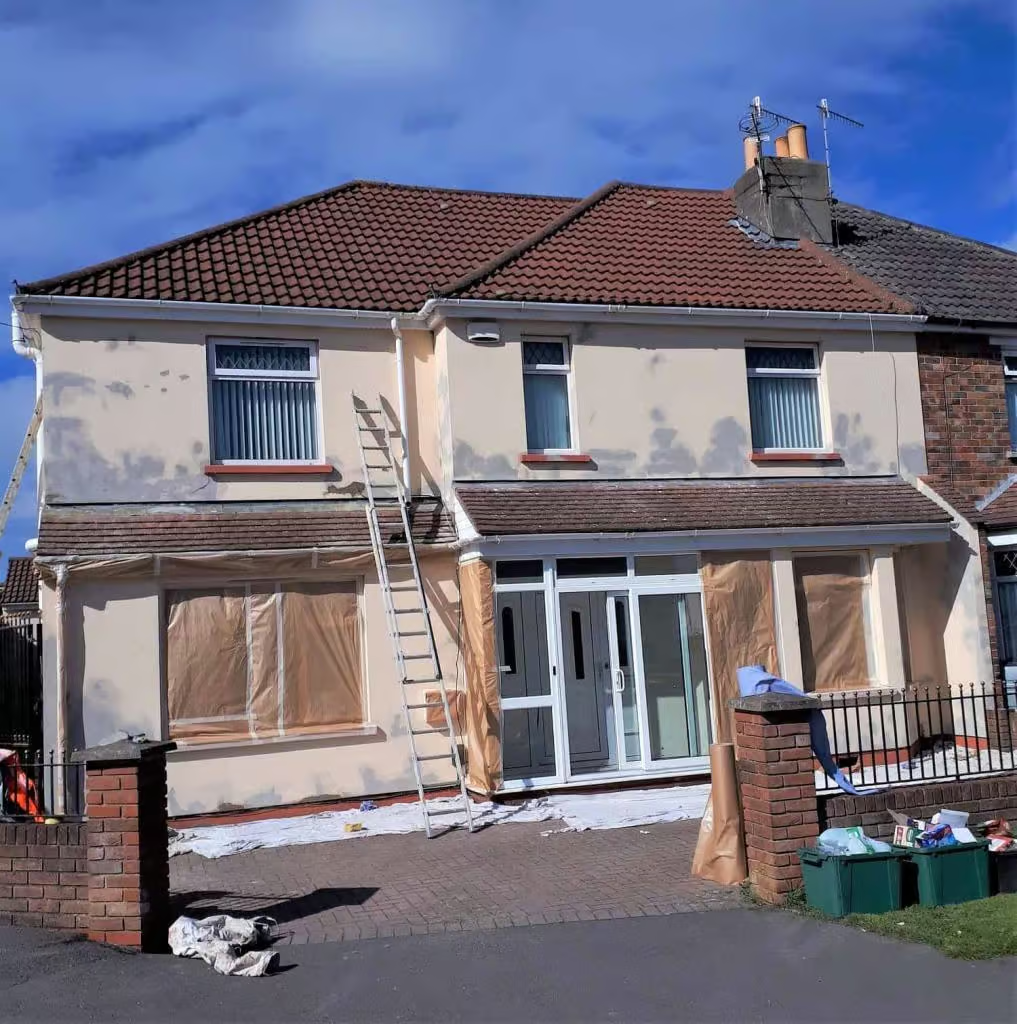
What the damage can mean
The pattern and location of cracking can help identify what needs investigation. A stable surface defect is different from continuing movement or a failed background; the cause shapes the repair.
Moisture and wall defectsRender that has lost its bond cannot be secured simply by coating over it. Unsuitable material needs removing to a stable edge and background before compatible repairs are built up.
Wider refurbishmentCheck the source of water as well as the finish. Gutters, roof junctions, sills and other defects may need separate repairs. Rendering is not a substitute for resolving a leak or a structural problem.
Replacement render systemsChoose the extent of the work
Published repair evidence
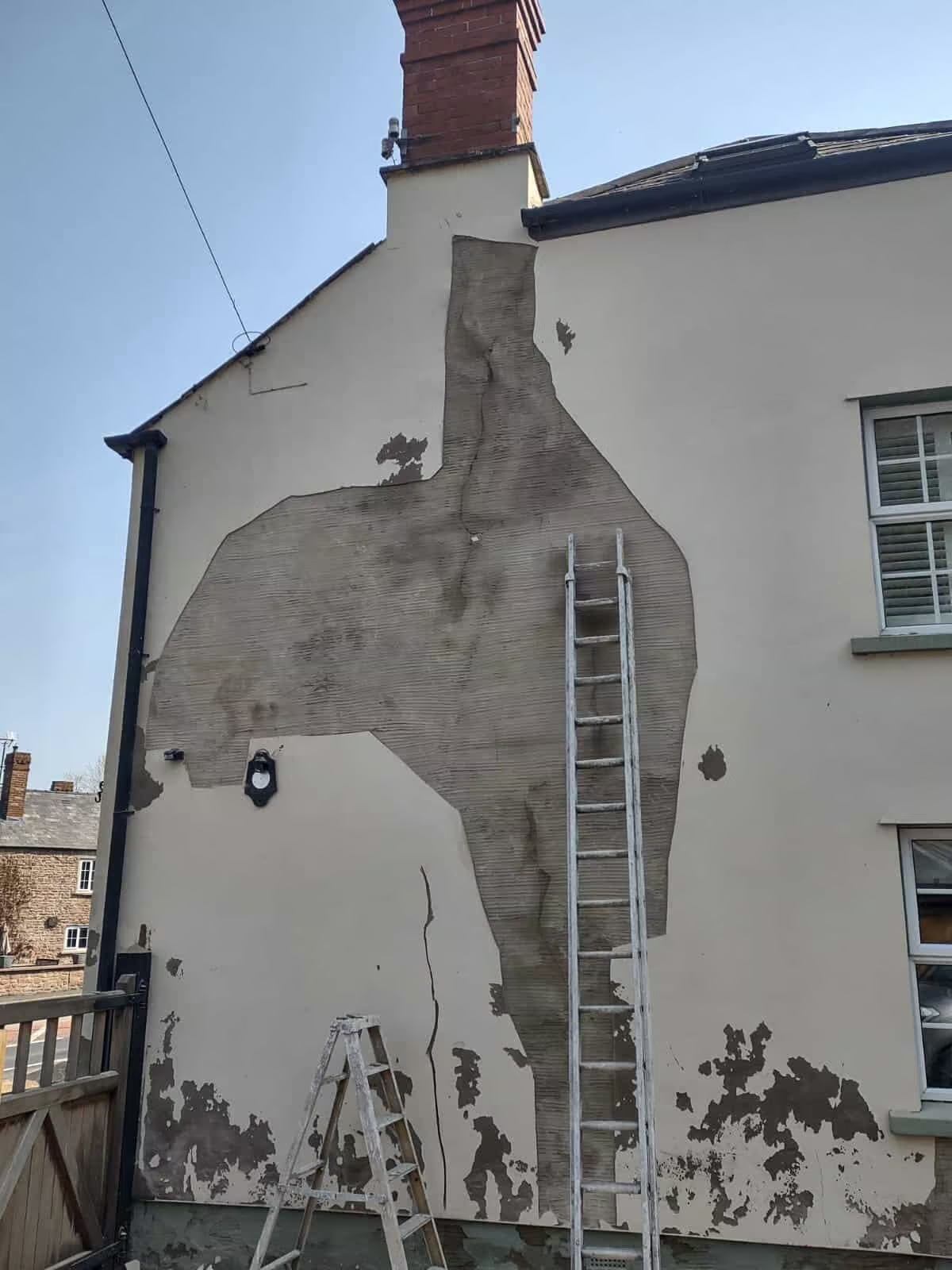
The Harrogate record describes opening damaged cracks, removing loose material, reinforcing and patching the affected areas. It states that the walls were left ready for the customer to repaint.
Both photographs on this page show the repair stage, with exposed patches and access equipment visible, before redecoration.
A new coating may be considered after suitable repairs, depending on the condition and compatibility of the existing surface.
Read the Harrogate repair recordHow the repair is planned
The repair needs to suit the existing wall and render, rather than simply conceal a mark. Where movement or water entry needs another specialist’s assessment, that should happen before the finish is replaced.
Agree whether the quotation covers local repairs, a whole elevation, decoration or a new coating. That distinction affects both price and appearance.
Planning refurbishment costsAssess the damaged and surrounding areas, consider likely causes and explain the proposed repair and finish.
Protect nearby surfaces, remove unsuitable material and clean and prepare the exposed areas.
Use compatible repair materials and reinforcement where specified. Allow for curing before any agreed coating or decoration.
Planning your project
A small repair at height can need more access provision than a larger ground-floor patch. The quotation should distinguish repair work from any final decoration or full-elevation finish.
Sometimes, if it is a suitable stable surface defect. Filling is not an adequate answer to loose render, ongoing movement or unresolved water entry. Assessment determines the appropriate treatment.
An exact match cannot be promised. Old render weathers, and the colour, aggregate and texture of new material may differ. Finishing a larger section or elevation can be discussed where appearance is important.
Not always. Sound, compatible areas may be retained. Widespread failure may make full removal more sensible than numerous patches; we explain the proposed extent after assessment.
It may address a damaged exterior surface involved in water entry, but it cannot resolve every damp cause. Leaks, defective details and the wider building condition need investigation.
Your local project
Tell us your postcode so we can discuss the property and check availability.
Request a rendering quote
Describe the damage, its location and the finish already on the walls. ‘Render repairs’ is selected below; change it if you are considering a larger refurbishment.
Call 01904 530924