Sound existing render
Firmly bonded render may be suitable for refurbishment after checks for defects, contamination and coating compatibility. Loose or hollow areas need attention before a new finish.
Render repairsSpray cork exterior coatings
A spray-applied cork coating can bring suitable exterior surfaces together under a new colour and texture. We assess the existing background and carry out the required preparation before recommending this approach.
Get a Rendering Quote Or call 01904 530924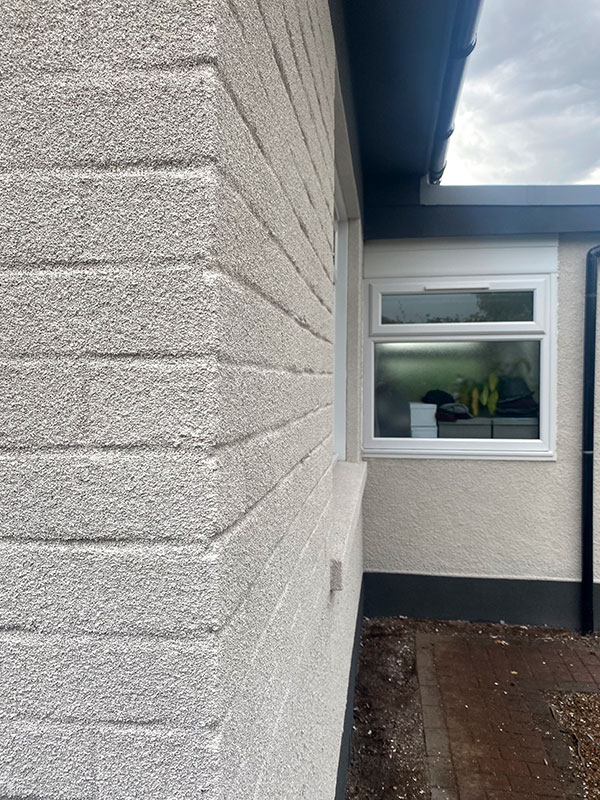
Understand the material
Often called cork render, spray cork is a coating containing cork granules, binders and pigments. It is applied to a prepared, compatible surface to provide a coloured, textured exterior finish.
Where sound render can be retained, refurbishment may avoid the disruption of removing the entire finish. Repairs and preparation still come first. The chosen product’s requirements determine suitable backgrounds, primers and application.
The final appearance follows the preparation beneath it. Existing brick courses, rough aggregate or uneven surfaces can remain visible unless an appropriate levelling system forms part of the work.
Options for existing pebbledashChoosing it for your property
Firmly bonded render may be suitable for refurbishment after checks for defects, contamination and coating compatibility. Loose or hollow areas need attention before a new finish.
Render repairsPorosity, condition and the existing profile influence preparation and appearance. A sample or agreed finish is useful where retained texture is part of the decision.
Discuss the existing surfaceSuitability depends on the whole wall, including old paint, render, moisture behaviour and exposure. A coating described as breathable is not automatically compatible with every traditional building.
Understand damp and renderingKeep the distinction clear
Preparation to application
Inspect the walls and previous finishes, discuss the texture you want and check the proposed product’s compatibility. Review colour samples rather than relying on a screen.
Protect adjoining surfaces. Deal with unstable material and the agreed defects, then clean and prepare the background. Primer or levelling work is used where specified.
Apply the product to its requirements, allowing for the background, weather and curing. There is no universal coat count or thickness for every cork coating.
Review the finish and surroundings. Follow the installed product’s cleaning, repair and aftercare guidance; check compatibility before any later painting or treatment.
Planning your project
A cork quotation should identify the product and the preparation as well as the coating. Retaining sound material may reduce removal work, but the price depends on what the walls need.
It may be possible where the render is secure and compatible with the selected product. Blown, loose or unsuitable material must be dealt with first; the coating cannot restore its bond.
Not automatically. A thin coating can follow the underlying profile. The York project photograph shows brick courses still visible. If you want a flatter result, discuss the additional preparation or an alternative render system.
It should not be presented as a general damp remedy. Leaks, defective junctions and the building’s moisture behaviour need investigation before a new coating is selected.
The range depends on the product and current availability. Discuss samples, retained texture and the proposed preparation during the quotation process. No specific manufacturer or colour range is assumed for every job.
Your local project
Tell us your postcode so we can discuss the property and check availability.
Request a rendering quote
Tell us what is on the walls now and the appearance you have in mind. ‘Spray cork coating’ is selected below, and you can change it if you need advice on alternatives.
Call 01904 530924