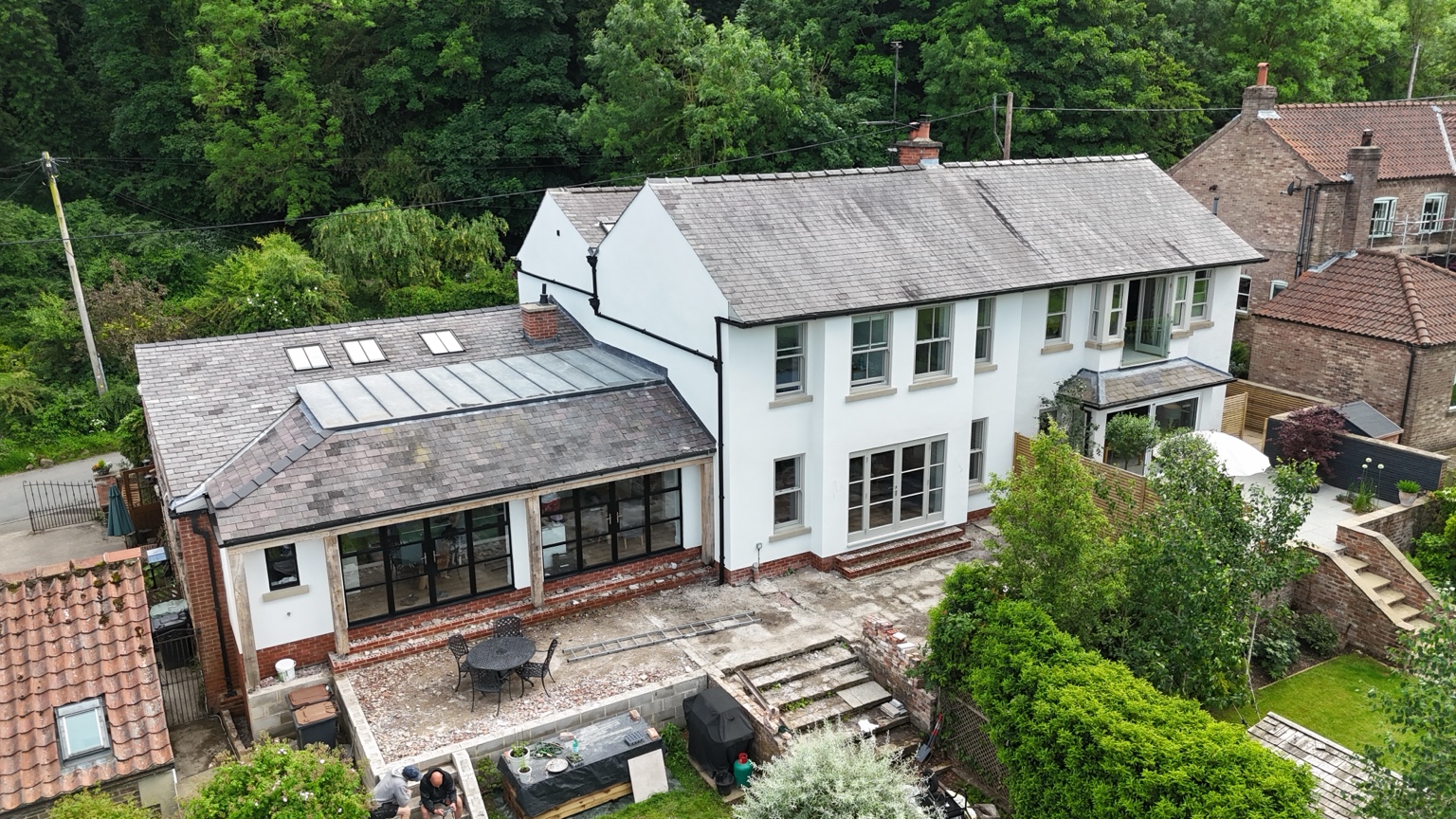
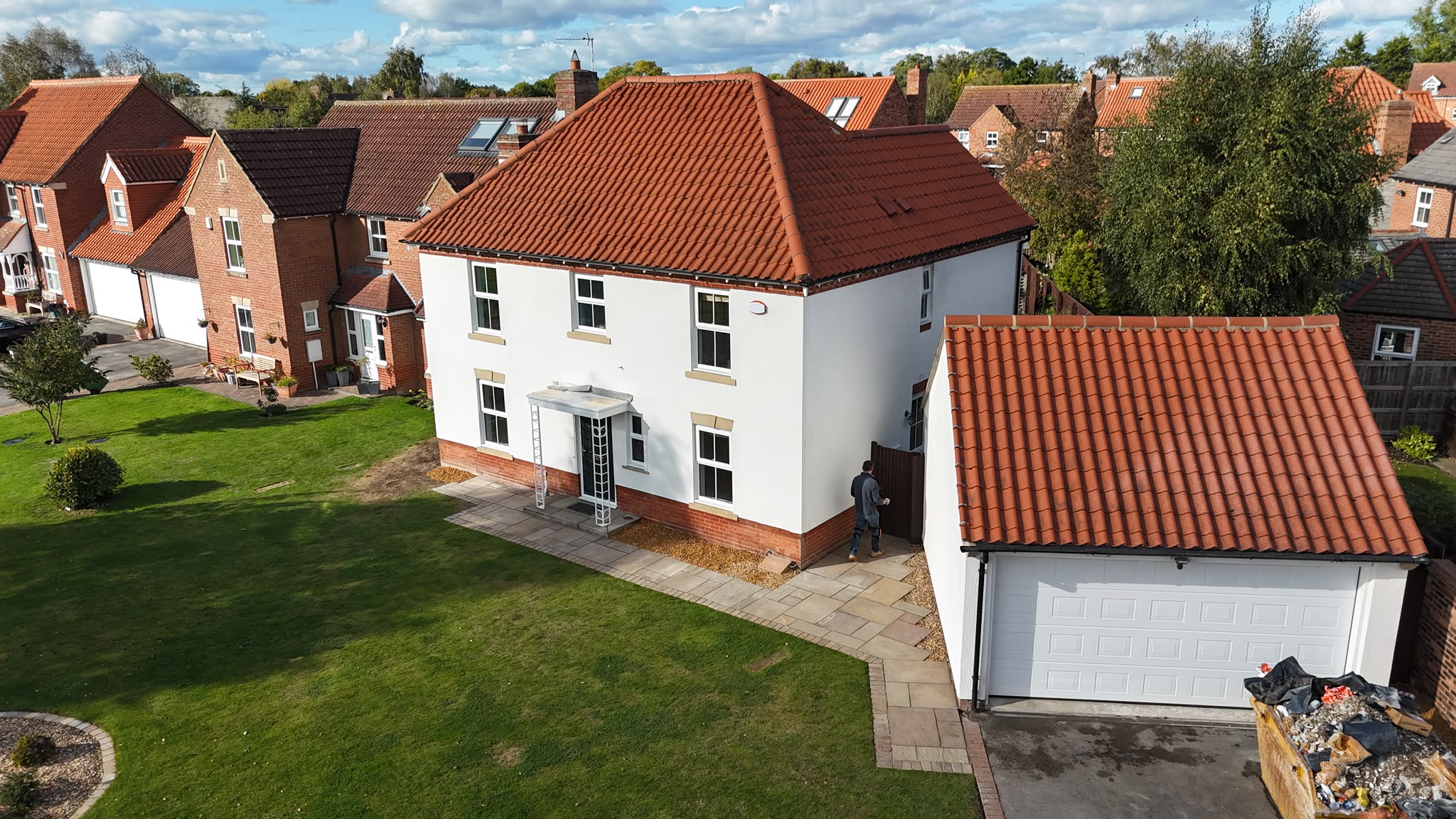
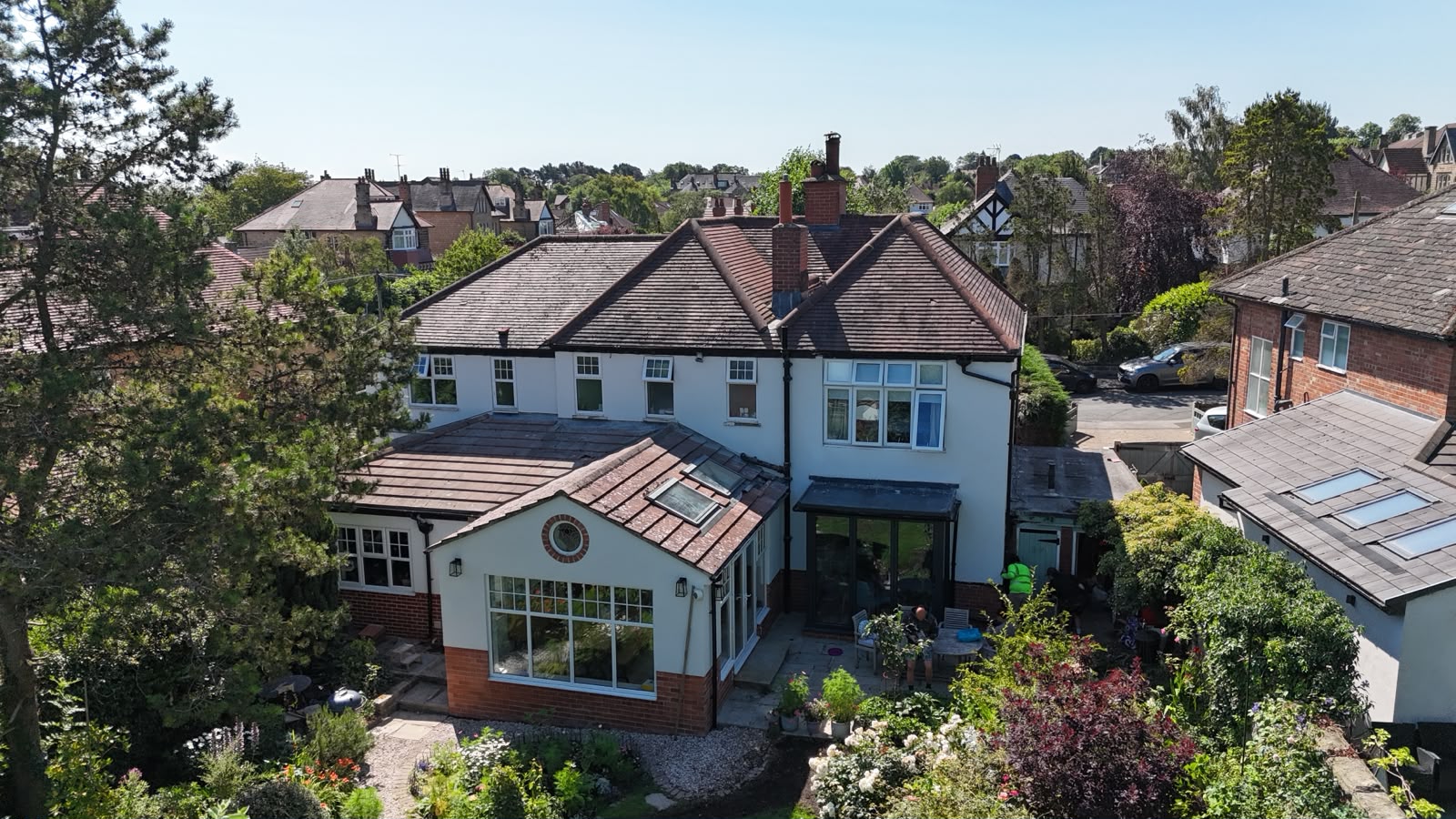
From replacing failed render to finishing new masonry, the right silicone system starts with the condition of your walls. We assess the background and explain the preparation before recommending a finish.
Silicone thin-coat render is a textured, coloured finishing coat used as part of a specified exterior render system. The topcoat provides the appearance; the background, basecoat and detailing support the installation.
Traditional sand-and-cement render is often finished with paint. A thin-coat silicone system uses a separate coloured topcoat over a suitable basecoat. It is not simply a new coating for any existing wall.
Compatible materials, specified for the background.
03
Primer
Used where required by the selected system.
04
Silicone finish
The selected colour and texture.
Illustrative sequence, not a universal specification. Materials, coats and curing follow the chosen manufacturer’s instructions.
Mesh reinforcement is part of the specified basecoat build-up. It does not replace sound walls, investigation of significant movement or careful detailing around openings.
Suitability comes first
What is on your walls now?
The condition and construction of the property determine the preparation. A good-looking topcoat cannot make an unsuitable background sound.
Brick or blockwork
New masonry and existing exposed walls need a system suited to their construction and exposure. We consider soundness, contamination, moisture and the junctions with other materials.
Older or solid-wall properties may need a different approach; a silicone finish is not automatically the right choice.
Firmly bonded, compatible render may be suitable to retain. Hollow, loose or failing areas need attention, and significant cracks or water entry require investigation before a new finish.
Assessment establishes whether repair, an overcoating system or removal is appropriate.
The bond and condition of the existing pebbledash matter. Covering loose material does not resolve the cause of failure. Where removal is needed, the exposed background is assessed and prepared for the new system.
We look at the construction, existing coatings, signs of failure and the details around openings and rooflines. The proposed preparation, access and render system should be clear in the written quotation.
02
Protection & preparation
Windows, doors, paving and nearby surfaces need protection. Depending on the assessment, preparation can include cleaning, removing unsound material, repairs and suitable beads or junction details.
03
Basecoat, reinforcement & primer
The chosen basecoat and reinforcement are installed to the system specification. Curing and any required primer come before the finishing coat. Coat numbers, mesh positions and drying periods are product-specific.
04
Finishing & handover
The silicone topcoat is applied and textured using the method suited to the chosen product. Finishing details are checked, protection is removed and care requirements are discussed.
Living with the finish
Colour, texture and care.
Choose from samples, not a screen.
Colours and textures depend on the product range and current availability. Discuss the appearance you want and look at samples before making a final choice. Light and the surrounding brick, roof and joinery affect how a colour looks on a house.
Texture and application also influence the result. The proposed finish should be identified in the quotation rather than assumed from a photograph.
Keep the aftercare straightforward.
A rendered exterior still needs attention. Follow the installed product’s cleaning and care guidance, check gutters and water-shedding details, and look into impact damage, staining or recurring damp patches.
Aggressive pressure washing or incompatible treatments can damage a finish. Ask about suitable cleaning methods before using a product or arranging work.
Planning the work
What shapes the quotation?
A useful silicone rendering price starts with the property and scope, rather than an unqualified square-metre rate.
Sometimes. Existing render needs to be sound, firmly bonded and compatible with the proposed system. Loose or hollow areas, significant cracking and water entry need investigation first. Assessment determines whether to retain, repair or remove the old finish.
Does pebbledash always need to come off?
+
No. A sound background may be suitable for a specified overcoating system. Failing or poorly bonded pebbledash can require removal. We assess the surface and explain the preparation before recommending a route.
Is silicone rendering suitable for an older house?
+
Age alone does not decide suitability. Wall construction, existing coatings, moisture behaviour and exposure all matter. Older or solid-wall buildings may need a different approach. We would not recommend a thin-coat system simply to cover an underlying problem.
How long will the work take?
+
The scope, access, repairs, weather and the selected system’s curing requirements affect the programme. Removing failed render involves different work from finishing a suitable new background. We can discuss a realistic sequence once we understand the property.
Will silicone render stop damp or prevent cracks?
+
A finish is not a cure for every moisture or movement problem. Leaking gutters, defective junctions, damp and significant cracks need their causes assessed. Reinforcement does not make a wall immune to movement or remove the need for sound construction and detailing.
Does silicone render need painting?
+
The finish is supplied in a selected colour, so painting is not normally part of its initial application. Later maintenance depends on the product and exposure. Follow the installed system’s aftercare advice and check compatibility before applying a paint or other treatment.
Tell us about the existing surface and the change you want to make. Silicone rendering is selected below; you can choose another service if you are unsure.